If you have ever tried to coordinate a 20-person group pickup at SAT without a bus, you already know how that version plays out: half the group at the inner curbside lane where commercial vehicles are not allowed, two people still circling the baggage carousel, and a rideshare surge that turns a 15-minute ride down US-281 into a $40-per-car argument. San Antonio International Airport handles nearly 11 million passengers a year across two terminals, and its lower-level arrivals curb is not designed for groups that try to improvise on arrival day. A charter bus or party bus rental to SAT collapses the whole operation into one call: the bus stages at the free cell phone waiting lot near Airport Boulevard, your coordinator confirms everyone is assembled at the outer commercial curb, and the group is rolling down US-281 South before the last rideshare even matches.
This guide covers exactly where a commercial bus is and is not allowed at Terminal A and Terminal B, why arrivals pickups run completely differently from departures drop-offs, what the active Terminal C construction means for your approach at Terminal B, and how to build realistic buffer time into a Loop 410 and US-281 run so nobody sprints through Terminal A's security line.
Why Rent a Charter Bus or Party Bus to San Antonio International Airport?
Airport group pickups break down in a predictable spot: the moment people start arriving on different flights and clearing baggage claim in waves. A 30-person corporate group flying into Terminal A on a Tuesday evening spreads across three or four incoming flights, bags take 20–30 minutes from the carousel, and everyone needs to land at the same Riverwalk hotel. Coordinating that through separate rideshares means eight individual bookings, staggered arrivals at the hotel, and at least one group that gets deposited at the wrong curb.
One charter bus — staged in SAT's free cell phone lot, called in the moment the last person clears baggage claim — collapses the whole scramble into a single 15-minute run to whatever downtown address your group is headed.
The same math runs in reverse for departures. Instead of ten separate cars hunting for the economy lot shuttle, a San Antonio airport charter bus picks the entire group up from one address — a hotel near the Medical Center, a venue on Broadway, a corporate campus off US-281 — loads luggage into the undercarriage bays, and drops everyone at the departures curbside for their airline. No one misses a flight because they took the wrong parking garage exit.
One booking covers the whole group, one pickup window keeps everyone together, and the ride to SAT is already handled before departure morning begins. The San Antonio airport transportation page covers how these runs come together for different group types and occasions.
Charter Bus & Party Bus Drop-Off at Terminal A and Terminal B
SAT's two terminals occupy a single connected building at 9800 Airport Blvd. Terminal A runs 17 gates and handles Southwest Airlines, Delta, all international carriers, and the bulk of daily SAT traffic. Terminal B holds 10 gates for American and United. The road in front of each terminal has two levels — an upper roadway for departures/ticketing and a lower roadway for arrivals/baggage claim — and the lower level is where the commercial vs. private curb distinction becomes critical for any bus group.
Departures: Dropping Your Group at the Upper-Level Curbside
For a group flying out, a charter bus or minibus accesses the upper roadway and pulls to the departures curbside for the airline's terminal — Terminal A for Southwest, Delta, and all international; Terminal B for American and United. The drop-off itself is straightforward. Undercarriage bays on a full charter bus handle the group's entire luggage load — checked bags, oversized gear, golf clubs — so the group steps off the bus and wheels straight to check-in rather than hunting for a cart.
The bus drops and moves. No extended staging, no permit at the departures curb. The biggest risk on the departures side is not the curb — it is timing on US-281.
More on that below.
For smaller groups of 15–30, a minibus offers greater maneuverability at the upper-level curbside and still handles overhead storage plus modest underfloor cargo. Both Terminal A and Terminal B are accessible off the same Airport Boulevard approach, so a group splitting across airlines — some on Southwest, some on American — can be dropped in sequence on a single pass through the upper level.
Arrivals: The Outer Commercial Curbside — Not the Inner Lane
Arrivals are where most first-time airport group coordinators get it wrong. SAT's lower-level arrivals roadway runs two sets of curbs: an inner curbside lane directly in front of baggage claim for private vehicle pickups, and an outer commercial curbside for pre-arranged ground transportation — taxis, rideshares, and charter buses. Commercial vehicles are directed to the outer curb only.
Per the airport's rideshare page, Uber, Lyft, and approved rideshare services pick up at "the outer commercial curbside, lower level of Terminal A." Per the airport's taxi page, "taxi cabs are available at the outer commercial curbside at Terminal A." Charter buses operate under the same commercial-lane framework on the outer curb.
The airport's charter bus page is brief and specific on one point: "Chartered service is available only upon a pre-arranged basis." No walk-up service, no summoning a charter bus the way you'd call a cab. The bus is booked in advance, staged in the cell phone lot, and called to the outer commercial curb only when the group is assembled and ready to load.
Directing your group to the inner curbside — or calling the bus before everyone has cleared baggage claim — creates congestion at the outer curb and slows the whole approach. The sequence that works is described in the section below.
Inner curb = private vehicles. Outer commercial curb = charter buses, taxis, and rideshare. At SAT's lower-level arrivals roadway, commercial vehicles including charter buses use the outer curbside only — not the inner lane in front of baggage claim.
Have the full group assembled at the outer curb with luggage in hand before calling the bus in from the cell phone lot.
Arrivals vs. Departures: How the Party Bus & Charter Bus Pickup Plan Changes at SAT
Departures are simple. Your bus picks your group up from a hotel, an event venue, or a home address, loads luggage into the undercarriage bays, drives 8 miles up US-281 to Airport Boulevard, and drops the group at the upper-level departures curb for their terminal. Everyone has the same departure time, which anchors the whole plan.
Build 30–45 minutes of buffer into the hotel pickup time — enough runway that a slowdown on the US-281 stretch near the Loop 410 interchange does not cost anyone their flight — and the rest runs itself.
Arrivals require a different mental model, and the cell phone waiting lot is the key. SAT's free cell phone lot sits near the Airport Boulevard and Loop 410 intersection, adjacent to the QMart and Burger King, with free Wi-Fi, open at all hours. The bus stages there during customs processing, flight delays, and baggage claim time — not at the curbside.
Here is the workflow that keeps an arrivals pickup clean: each passenger clears baggage claim and walks to the outer commercial curbside on the lower level; the group coordinator waits until every person in the group is through and assembled with their bags; then one call goes in confirming the group is ready, and the bus pulls around from the cell phone lot to the outer commercial curb. The pull-around is typically 3–5 minutes. Everyone loads, undercarriage bays take the luggage, and the group is on US-281 South in minutes.
The step that gets skipped on complicated travel days: the coordinator has to actually wait for the last person before making the call. On a single group flight where everyone lands together, it is easy. On a corporate retreat where four connecting flights arrive over 90 minutes, it takes patience — and the correct answer is still to wait.
The bus stays staged and does not move until the call comes in. That is the whole point of pre-arranging it rather than hailing something on the spot.
Gather first, then call. For arrivals at SAT, the group assembles at the outer commercial curbside (lower level) before the bus is called in from the cell phone lot. An early call means a commercial bus sitting in a lane with no one to board — and it creates backlog at the outer curb.
One coordinator with a full count is all it takes to pull a clean airport exit.
Terminal C Construction at SAT (2026–2028): What Charter Bus Groups Need to Know
SAT is in the middle of a major expansion — a new Terminal C is under construction as part of a roughly $2 billion redevelopment project — and Phase I has been actively affecting curbside access at Terminal B since March 2026. Starting March 23, 2026, two of the four curbside lanes at the far end of Terminal B were closed on both the upper (departures) and lower (arrivals) levels, to support roadway work for the future Terminal C. Phase I runs through approximately December 2026. Further phases are expected to continue affecting Terminal B and eventually Terminal A through 2028, per the airport's official construction page.
For a charter bus group, the direct consequence is reduced lane space at Terminal B's far end during active Phase I work. American and United travelers should plan for a tighter curbside approach and allow an additional 10–15 minutes in the buffer for Terminal B runs. The airport's own guidance during construction: use the short-term garage for drop-offs where possible (first 15 minutes are free, then $3) rather than staging on the reduced-lane curbside.
Any group flying American or United should check the current Phase status at the airport's construction page before travel — approach conditions can shift as construction progresses through each phase.
US-281, Loop 410, and the Drive to SAT: Buffer Times That Matter
Every road to SAT runs through the same gateway: Airport Boulevard, which exits off the Loop 410 / US-281 interchange on the north side of the city. The airport is 8 miles north of downtown, and off-peak that run on US-281 from the River Walk takes 15–20 minutes. During the morning departure rush (7–9 AM) and the afternoon/evening peak (4:30–6:30 PM), that same stretch adds 15–20 minutes, and the Airport Boulevard exit ramp from US-281 develops its own backup when several flights cluster at the same departure window.
The buffer rule for charter bus groups headed to a SAT departure: any flight before 9 AM or after 5 PM deserves an extra 20 minutes on top of whatever feels like enough. TSA lines at SAT can add another 20–30 minutes on peak mornings, particularly during spring break (mid-March) and Fiesta San Antonio in April — both of which push significant departure traffic through the airport. The airport's own standard guidance for domestic flights is to arrive two hours ahead; for international at Terminal A, three hours.
A charter bus that leaves early sits at the gate early. A charter bus that leaves with a tight margin becomes a group jogging through Terminal A.
| From… | Approx. distance to SAT | Off-peak drive time | Rush-hour buffer to add |
|---|---|---|---|
| Downtown / River Walk | ~8 miles | 15–20 min | 15–20 min |
| Pearl District / Broadway Corridor | ~6 miles | 12–18 min | 10–15 min |
| North Star Mall / Medical Center area | ~3–4 miles | 8–12 min | 5–10 min |
| Stone Oak / Huebner corridor | ~10–12 miles | 15–20 min | 10–15 min |
| New Braunfels | ~40 miles | 45–55 min | 15–25 min |
| Austin (I-35 South) | ~75 miles | 75–90 min | 15–30 min |
During Fiesta San Antonio (late April) and NCAA tournament weekends at the Alamodome, hotel blocks across SA fill and road congestion stiffens across the city. For those windows, treat the rush-hour buffer as the floor, not the ceiling. The Loop 410/US-281 interchange is the pressure point every SA local recognizes — it can pass in five smooth minutes on a Tuesday afternoon and turn into a 25-minute crawl on a Friday before a long weekend.
Book the bus with enough lead time to absorb the unpredictable version.
What Self-Parking at SAT Actually Costs — and the Per-Head Math
On-site parking at SAT runs roughly $8 per day in the economy green and red lots (with a complimentary shuttle to the terminals), around $14 per day in the covered long-term garage, and up to $25 per day in the short-term garage closest to the terminals, per the airport's published rates. For a 30-person group that drives 10 separate cars and parks in the economy lot for a five-day trip: that is roughly $400 in parking alone, $700 in the long-term garage, or $1,250 in the short-term option — before fuel, before the shuttle cycle, and before the coordination overhead of getting 10 cars into the same lot section. One car inevitably takes the wrong exit and ends up on the far side of the Red lot.
A charter bus is one flat rate split across the whole group. For a 30-person group on a round-trip airport run — hotel departure pickup and then the arrivals pickup on the return day — typically a 4–6 hour rental total. At a charter bus rate of $200–$350 per hour, that falls in the range of $800–$2,100 depending on vehicle and timing.
Across 30 people, that is roughly $27–$70 per person — and for any trip where the group would otherwise have parked in the long-term garage across multiple days, the per-head math on the bus frequently wins. Once your group exceeds about 12–15 people, the comparison almost always runs in the bus's direction.
What Size Charter Bus or Party Bus Does Your SAT Airport Group Need?
Airport runs put a premium on luggage capacity that stadium and event trips typically do not. Most groups flying through SAT have checked luggage — full-size bags, sports equipment, oversized gear from a Texas hunting trip — and the right vehicle needs to handle it without a second run. Here is how the full vehicle lineup maps to the common SAT group scenarios.
| Vehicle | Seats | Luggage capacity | Best SAT scenario |
|---|---|---|---|
| Sprinter van | Up to ~14 | Overhead and rear compartment — light bags only | Small executive airport transfers, VIP arrivals without checked bags |
| 14-passenger Sprinter limo | Up to ~14 | Overhead storage — modest bag count | Bridal party arrivals, small corporate VIP groups at Terminal A |
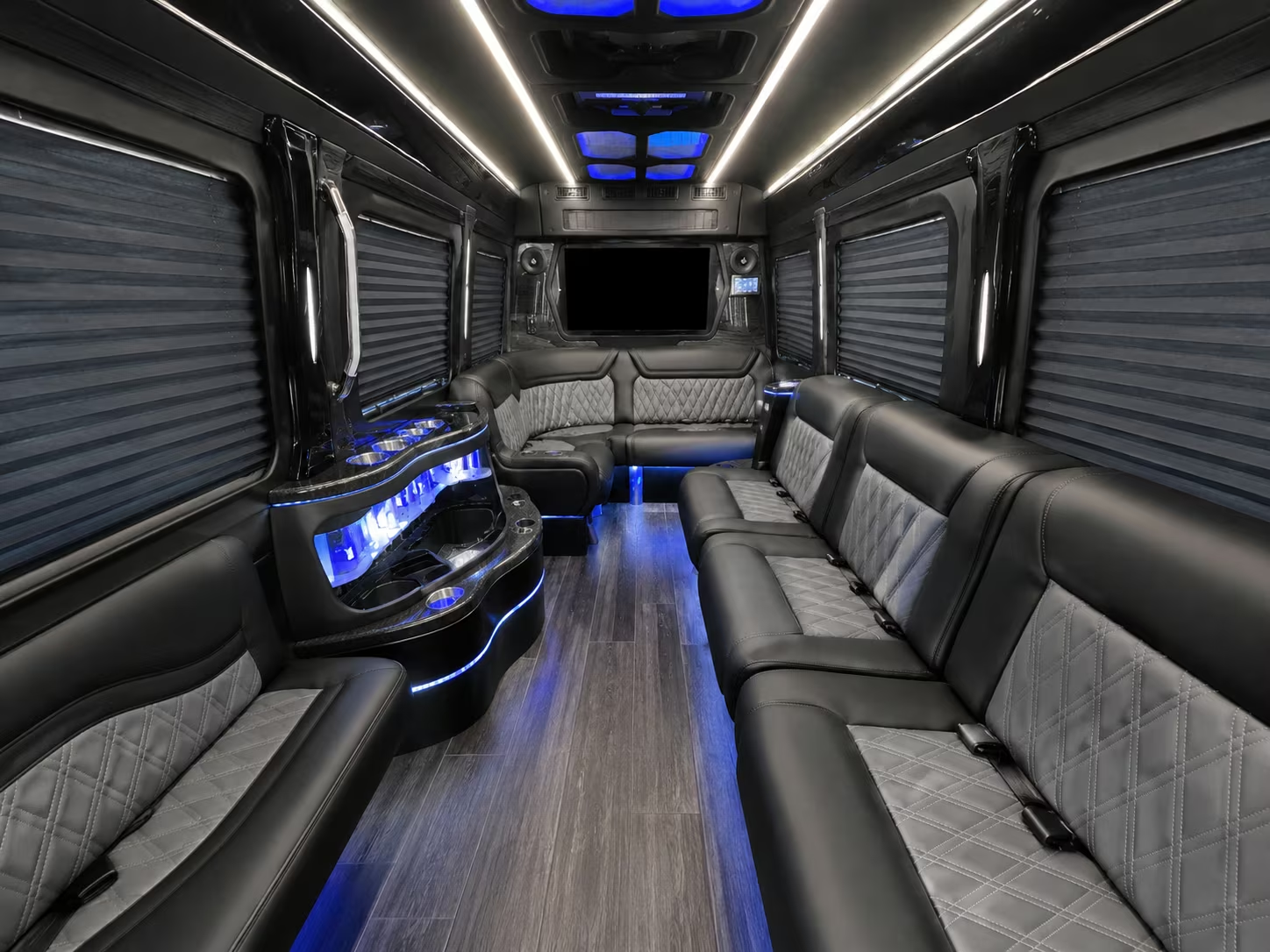
| Party bus (15–50 passengers) | ~15–50 | Limited — cabin prioritized over cargo | Celebrations arriving carry-on only; not the right fit for heavy checked luggage |
| 15–35 passenger minibus | ~15–35 | Overhead bins plus limited underfloor storage | Mid-size corporate and wedding groups; easier maneuverability at SAT's curbside |
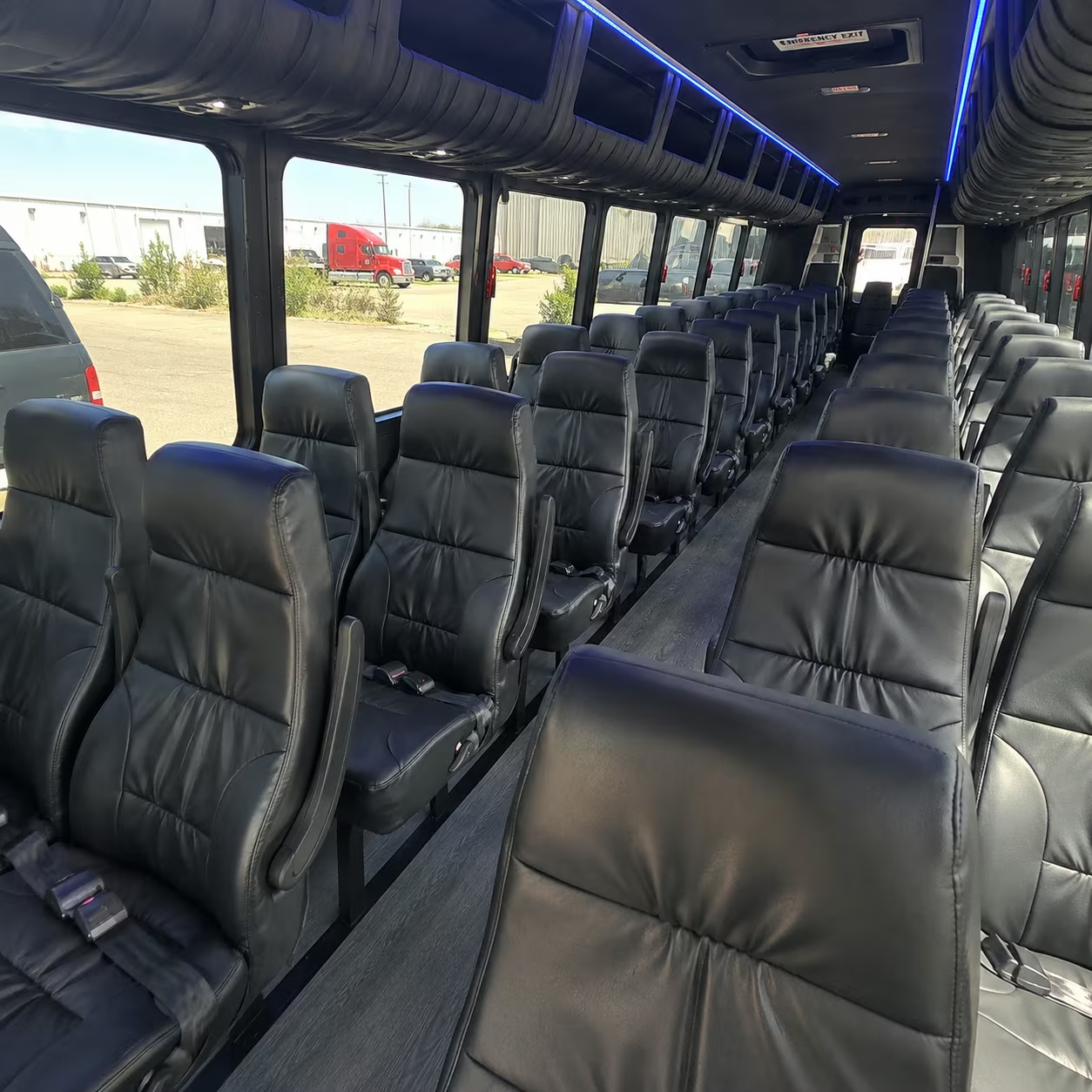
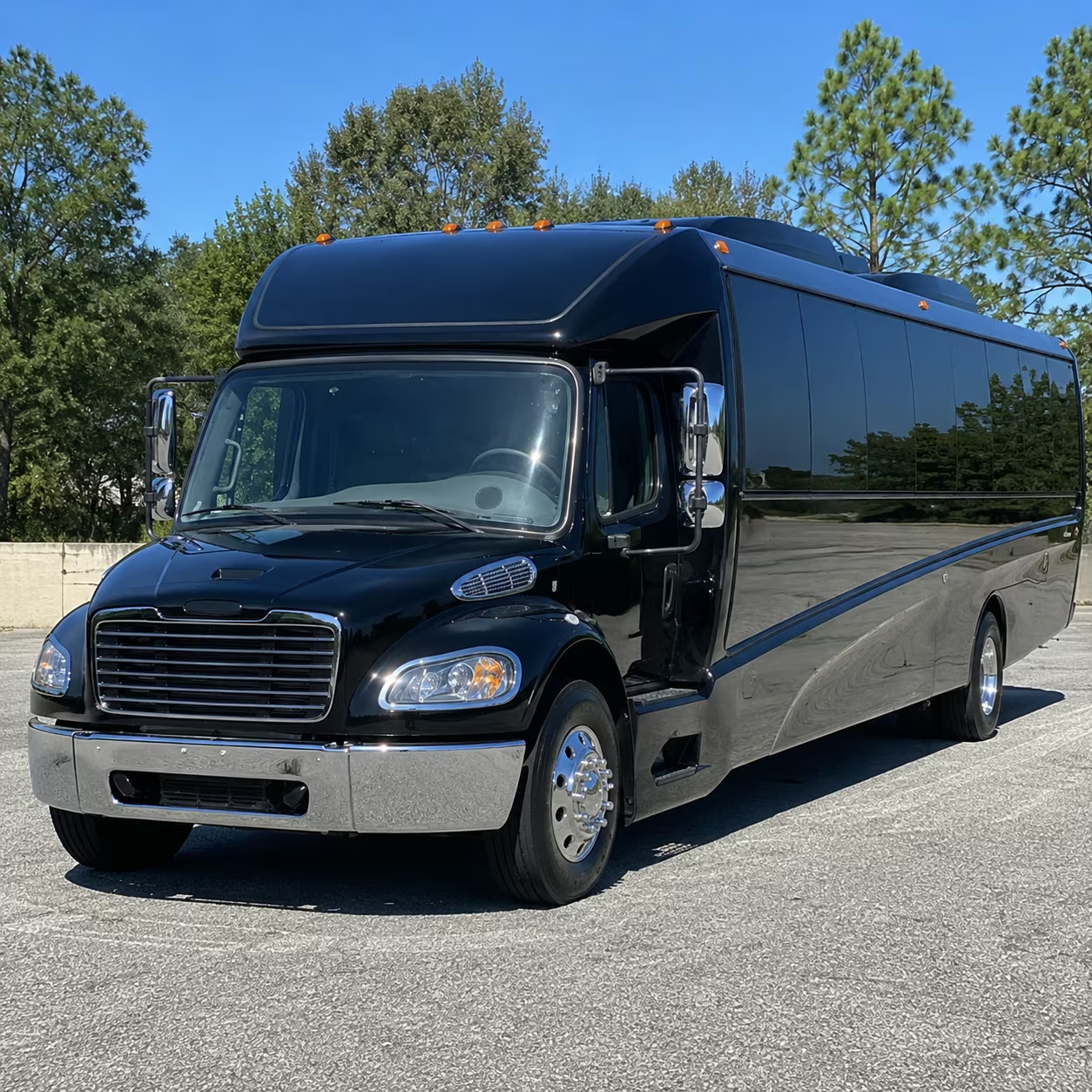
| 40–56 passenger charter bus | Up to 56 | Deep undercarriage bays — full group luggage load, oversized gear | Large conventions, wedding guest groups, corporate retreats flying in together |
The undercarriage bay on a full coach is the single biggest operational advantage for SAT airport runs. A standard charter bus carries several hundred cubic feet of cargo below the cabin — enough to load a large group's entire checked luggage, golf bags, and oversized items in one pass at the curbside. The group loads once and departs.
No shuttle loop from the economy lot, no second vehicle run for the bags, no last-minute scramble at the carousel because two suitcases came out late. For groups traveling with minimal bags — a bachelorette party flying in for a River Walk weekend, all carry-on — a minibus or party bus works cleanly and typically runs at a lower rate. The question is always: does the vehicle carry the bags, or does it only carry the people?
ADA-accessible vehicles are available through the network — note it in your quote request and the right vehicle can be matched to your group. SAT has accessible curb access at both Terminal A and Terminal B.
San Antonio Airport Charter Bus & Party Bus Rental Prices
Airport runs at SAT are typically quoted as hourly blocks — the vehicle is dedicated to your group from hotel pickup through airport drop-off (or from airport pickup through hotel return), including any cell-phone-lot wait time during arrivals. Rates vary by vehicle, time of week, and pickup distance from SAT. To give you an idea: a minibus runs roughly $200–$275 per hour on weekdays, while a full charter bus runs $200–$350 per hour.
A round-trip airport package — departures drop on day one, arrivals pickup on the return — might run 4–6 hours of total vehicle time across both legs, landing in the range of $800–$2,100 depending on vehicle and timing. Across a 25-person group, that tends to fall around $32–$84 per person.
For arrivals pickups where multiple flights arrive over a long window, building in an extra 45–60 minutes of staged wait time is worth doing — especially for international arrivals at Terminal A, where U.S. Customs and Border Protection processing adds unpredictable time, and where the group cannot board until the last person clears customs. The extra buffer is less expensive than rebooking.
Rates are planning ranges, not a quote. Your actual number depends on headcount, vehicle type, dates, and where the bus originates. The fastest path to a real number: fill out the quick form or call 726-208-4160 and have pricing in under a minute.
The San Antonio party bus prices page has a broader look at what different vehicles run across typical SA trip types.
A Sample SAT Airport Run
To give you an idea: a 22-person wedding party arrives at Terminal A on a Friday afternoon via flights from Houston, Dallas, and Austin — three separate arrivals over 90 minutes. Last flight lands at 4:30 PM. The group coordinator waits until all 22 people are through baggage claim and assembled at the outer commercial curbside on the lower level — call goes in at 5:00 PM when the full group is together.
A 25-passenger party bus pulls from the cell phone lot and reaches the outer arrivals curb by 5:08 PM. The group is at the Hotel Emma on Broadway (125 E Grayson St, San Antonio, TX 78215) by 5:25 PM — about 15 minutes on US-281 South on a clear Friday afternoon run. A 4-hour weekend party bus booking for this scenario might run $1,100–$1,500, roughly $50–$68 per person.
Less than the two-day economy lot parking bill for anyone who was contemplating driving in separately from the suburbs.
Tips for Group Travel Through San Antonio International Airport
- Know your terminal before the bus rolls. Terminal A covers Southwest, Delta, and all international carriers. Terminal B handles American and United. The commercial curbside for pickup is on the lower level of each terminal — same outer-curb lane, different building. Get the group to the right terminal's arrivals level before the bus is called.
- Gather first, then call. Never call for the bus while people are still at the baggage carousel. Full group assembled at the outer commercial curbside with bags in hand — then one call brings the bus in from the cell phone lot, typically within 3–5 minutes. An early call means a commercial bus sitting in an outer lane with no one to board.
- Build buffer into every departure. The Loop 410/US-281 interchange and the Airport Boulevard exit are where departure margins evaporate. For 6–9 AM and 4:30–7 PM flights from downtown SA, add at least 20 minutes beyond what feels comfortable. The bus can always arrive early. It cannot un-miss a flight.
- Account for Terminal B construction (active through late 2026 and beyond). Phase I lane closures at Terminal B have reduced curbside space on both levels since March 2026. American and United groups should allow 10–15 extra minutes and confirm current Phase status at the airport's construction page before the travel date.
- Do not direct the group to the inner curbside for commercial pickups. The inner lane at SAT's arrivals level is for private vehicles only. Charter buses, taxis, and rideshares all use the outer commercial curbside. This distinction is simple but it matters — wrong curb means the bus cannot legally pull to where the group is standing.
- For international arrivals at Terminal A, add customs time to the wait estimate. U.S. Customs and Border Protection processing at Terminal A varies significantly by group size and flight volume. Budget 30–60 minutes of customs and baggage time after the wheels-down notification before calling for the bus. The cell phone lot is free and the bus stages patiently — let the customs process finish before making the call.
Frequently Asked Questions
Where does a charter bus drop off at SAT for departures?
For departures, a charter bus accesses the upper-level (departures/ticketing) roadway and drops at the curbside for the airline's terminal — Terminal A for Southwest, Delta, and all international carriers; Terminal B for American and United. Undercarriage bays handle the full group's luggage load, the group unloads and wheels to check-in, and the bus clears out. The departures curb is the same upper-level road private drop-off vehicles use; commercial buses follow the same curbside approach on that upper level.
Where does a charter bus pick up at SAT for arrivals?
Charter buses and all commercial ground transportation use the outer commercial curbside on the lower-level arrivals roadway — not the inner lane directly in front of baggage claim, which is designated for private vehicle pickups. The bus stages at SAT's free cell phone waiting lot near Airport Boulevard and Loop 410 (adjacent to the QMart and Burger King), then moves to the outer commercial curb only after the group coordinator calls to confirm everyone is assembled and ready to load.
Can a party bus or minibus pick up at SAT, or is it only full charter buses?
Yes — party buses and minibuses pick up at the outer commercial curbside on the arrivals level, the same outer lane used by taxis and rideshares. The rules at SAT are the same for all commercial vehicles: use the outer curb, not the inner lane; service must be pre-arranged; and the bus is called in only once the group is fully assembled. A party bus works well for celebrations arriving with carry-on luggage only.
For groups with full checked bags, a minibus or full charter bus offers significantly more cargo capacity and is usually the better fit.
What is the cell phone waiting lot at SAT, and where exactly is it?
SAT's cell phone waiting lot is a free staging area for vehicles waiting to pick up arriving passengers. It sits near the Airport Boulevard and Loop 410 intersection, adjacent to the QMart and Burger King, with complimentary Wi-Fi. For charter bus groups, this is where the bus waits during baggage claim, flight delays, and customs processing — and where it stays until the group coordinator's call confirms everyone is at the outer commercial curbside and ready to load.
All vehicles in the lot must remain attended.
How does Terminal B construction affect charter bus groups in 2026?
Phase I (started March 23, 2026) closed two of the four far-end curbside lanes at Terminal B on both the arrivals and departures levels to support Terminal C roadway work. The practical impact for American and United groups is tighter curbside space and a slightly longer approach flow at Terminal B. Build an extra 10–15 minutes into the buffer for Terminal B runs, and for drop-offs during Phase I, the airport suggests using the short-term garage (first 15 minutes free) rather than staging on the reduced curbside. Construction is expected to continue in phases through 2028 — confirm current status at the official construction page before your travel date.
How far in advance should I book a charter bus or party bus for a SAT airport run?
For most airport runs outside of peak demand windows, two to four weeks of lead time is workable for standard vehicle sizes. For Fiesta San Antonio (late April), spring break (mid-March), NCAA Final Four events at the Alamodome, and large convention weeks when SAT sees heavy inbound and outbound traffic — book four to six weeks out. Right-size vehicles go quickly during those periods, and waiting costs both availability and price.
Call 726-208-4160 as soon as your travel dates are confirmed.
What public transit is available to and from SAT?
VIA Route 5 (McCullough/Navarro) runs between SAT and downtown San Antonio for $1.30 per ride in roughly 30 minutes. The stop is at the far west end of Terminal B's lower level, clearly marked on the column, per the airport's public transportation page. VIA is a practical option for one or two travelers with light bags.
For groups of 10 or more — especially with checked luggage — a charter bus or minibus covers the route faster, handles cargo that VIA cannot, and keeps the group together from the arrivals curb to the hotel door without a transfer.
What does self-parking cost at SAT, and how does a bus compare for a large group?
SAT on-site parking runs around $8 per day in the economy green and red lots (with a complimentary shuttle to the terminals), approximately $14 per day in the covered long-term garage, and up to $25 per day in the short-term garage, per the airport's published rates. For a 30-person group parking 10 separate cars on a five-day trip: economy lot parking runs roughly $400, the long-term garage around $700, and short-term around $1,250 — before fuel. A charter bus at one flat group rate split across 30 people typically runs $27–$70 per person for a round-trip airport package.
Once the group exceeds about 12–15 people, the per-head comparison almost always favors the bus. Get a quick estimate at 726-208-4160 and compare it against what your group would otherwise spend on parking.
How does an international arrivals pickup at Terminal A work for a group?
International flights land at Terminal A, where U.S. Customs and Border Protection processes all arriving international passengers. Processing time varies significantly — 30–60 minutes is a reasonable estimate for a medium-size group on a moderately busy day, but it can run longer on peak travel days or when multiple international flights arrive at once. The group coordinator should wait until every person has cleared customs and retrieved checked bags before making the call to bring the bus in from the cell phone lot.
There is no rush — the bus stages at the cell phone lot without a time limit. Call when everyone is at the outer commercial curbside and ready to load. Calling early does not speed up customs; it just puts a commercial bus sitting in a lane with no one to board.
Book Your Charter Bus or Party Bus to SAT Today
Whether it is a 22-person wedding party arriving at Terminal A's outer commercial curbside on a Friday afternoon or a 45-person convention group loading luggage onto a full coach at the departures level on a Monday morning, Sanantoniopartybuscompany.com makes it easy to compare charter buses, party buses, minibuses, and Sprinter vans serving San Antonio — with quotes in under 30 seconds, no account required. A support team is available any time at 726-208-4160 to walk through group size, terminal assignments, timing, and vehicle fit. SAT is 8 miles from downtown San Antonio.
The outer commercial curbside is where the bus meets the group. The rest is handled.
Headed somewhere else in San Antonio after the airport run? The Alamodome bus guide covers group drop-off and approach for concerts and NCAA events, and the San Antonio group transportation services page covers every other occasion. Call 726-208-4160 now to check availability and pricing for your SAT airport trip.